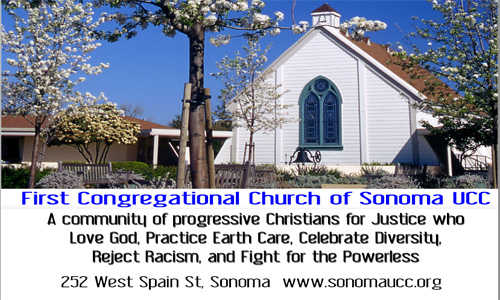
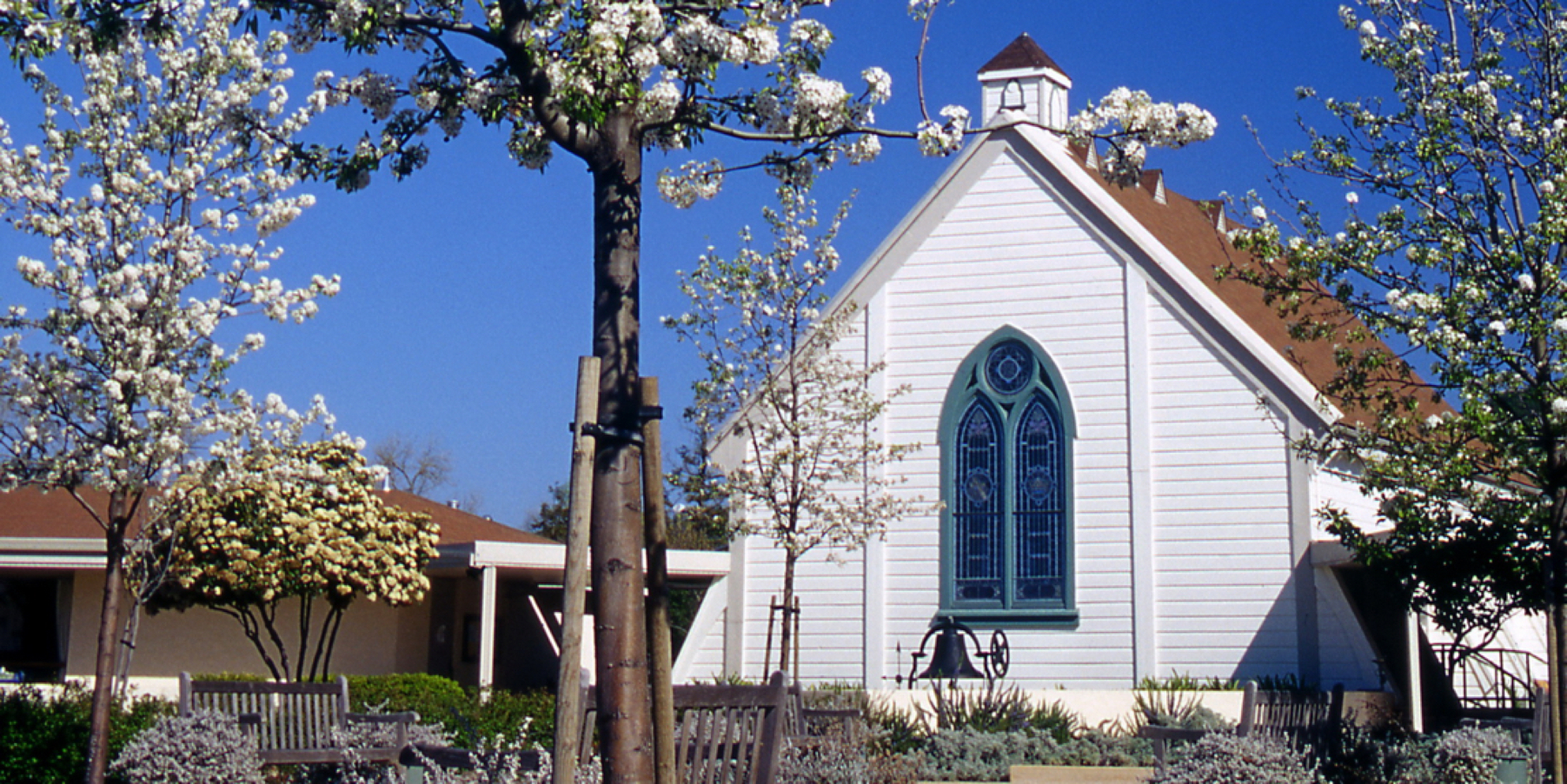
WELCOME TO
FIRST CONGREGATIONAL CHURCH OF SONOMA
WELCOME TO
FIRST CONGREGATIONAL CHURCH OF SONOMA
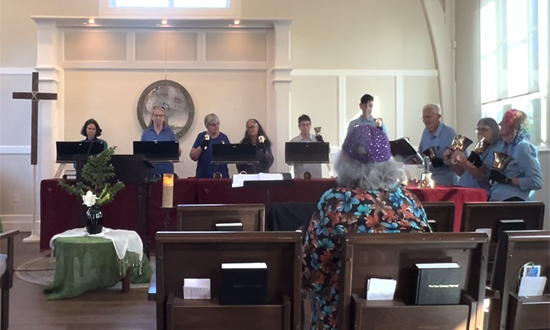
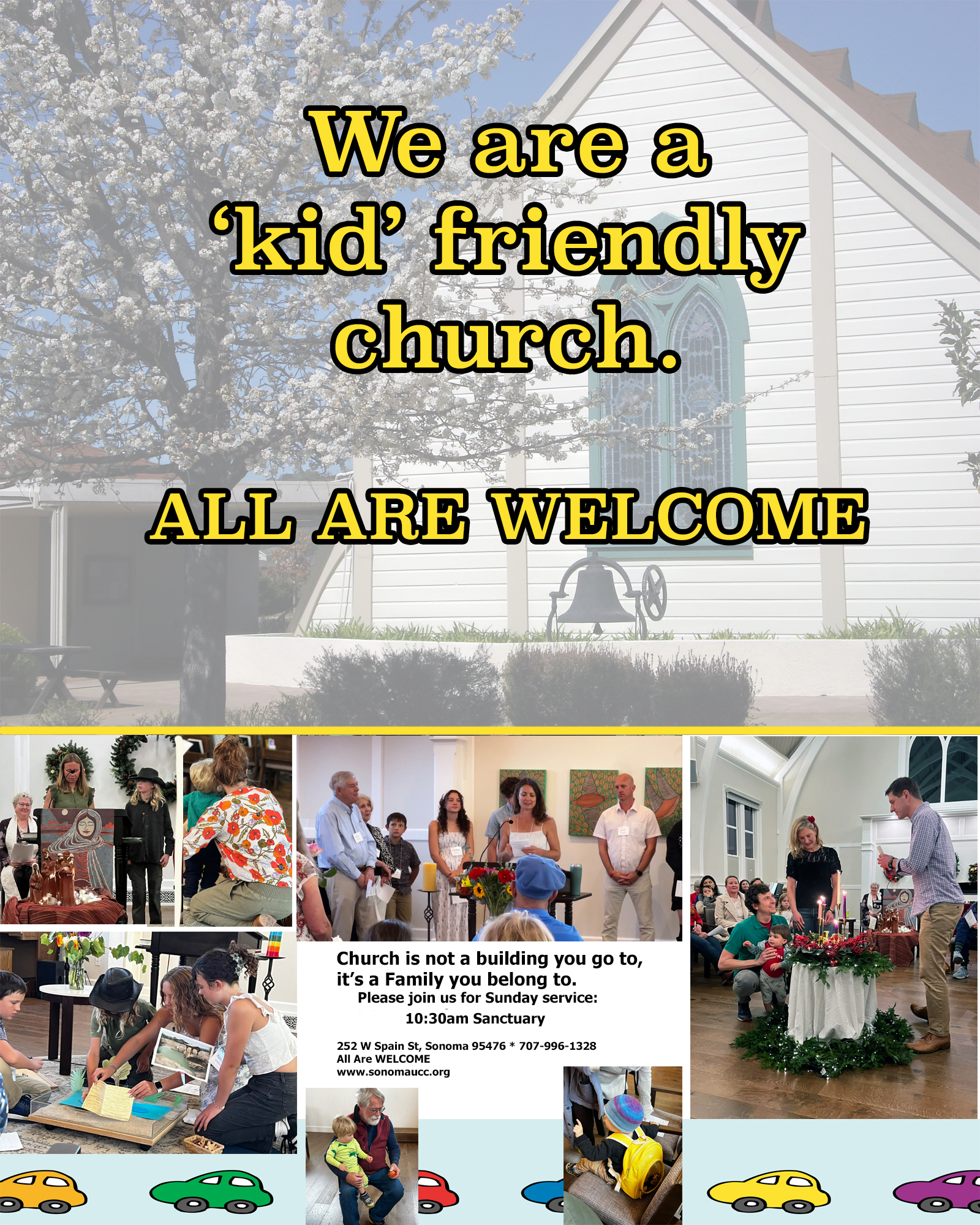
FCC Sonoma is excited to offer many ways to be together in Christian love. Our Sunday gatherings are held at 9:30 a.m. for Reflection Time in the Redwood Grove and at 10:30 a.m. for our regular service. Chair Yoga every 1st Sunday, 9:30 a.m. to 10:15 a.m in the West Wing. Details for the current Sunday's services can be found by clicking the "This Week" tab located at the top of this page. Our Earth Care Team offers monthly learning opportunities and spiritual walks, our Social Action Team organizes outreach activities. We enjoy being together to pursue new ideas and grow spiritually, to seek justice and serve those in need, and to advocate for the care of the earth. We invite you to join our community of love, acceptance, and service. Click here to learn about our Mission and Values. Click here to contact us directly.
We laugh freely and rejoice in the wonder of God’s love and care, while investing our energy, our courage, and our creativity in building a world of justice and equal opportunity for all.
We affirm our high calling to care for all creation and to seek justice for the oppressed, ever-conscious of the socioeconomic dimensions of climate change and ecological disruption and its effects on global inequality.
We are spiritual seekers who embrace Jesus’ message of love and compassion, and often find ourselves more comfortable with questions than answers. We value science, culture, and the wisdom of other religious traditions.
In the spirit of love, we welcome people of every age, economic status, ethnicity, physical ability, nationality, race, religious background, and sexual orientation to participate fully in all aspects of our church’s life and ministry.
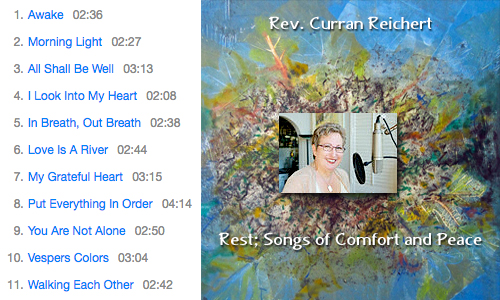
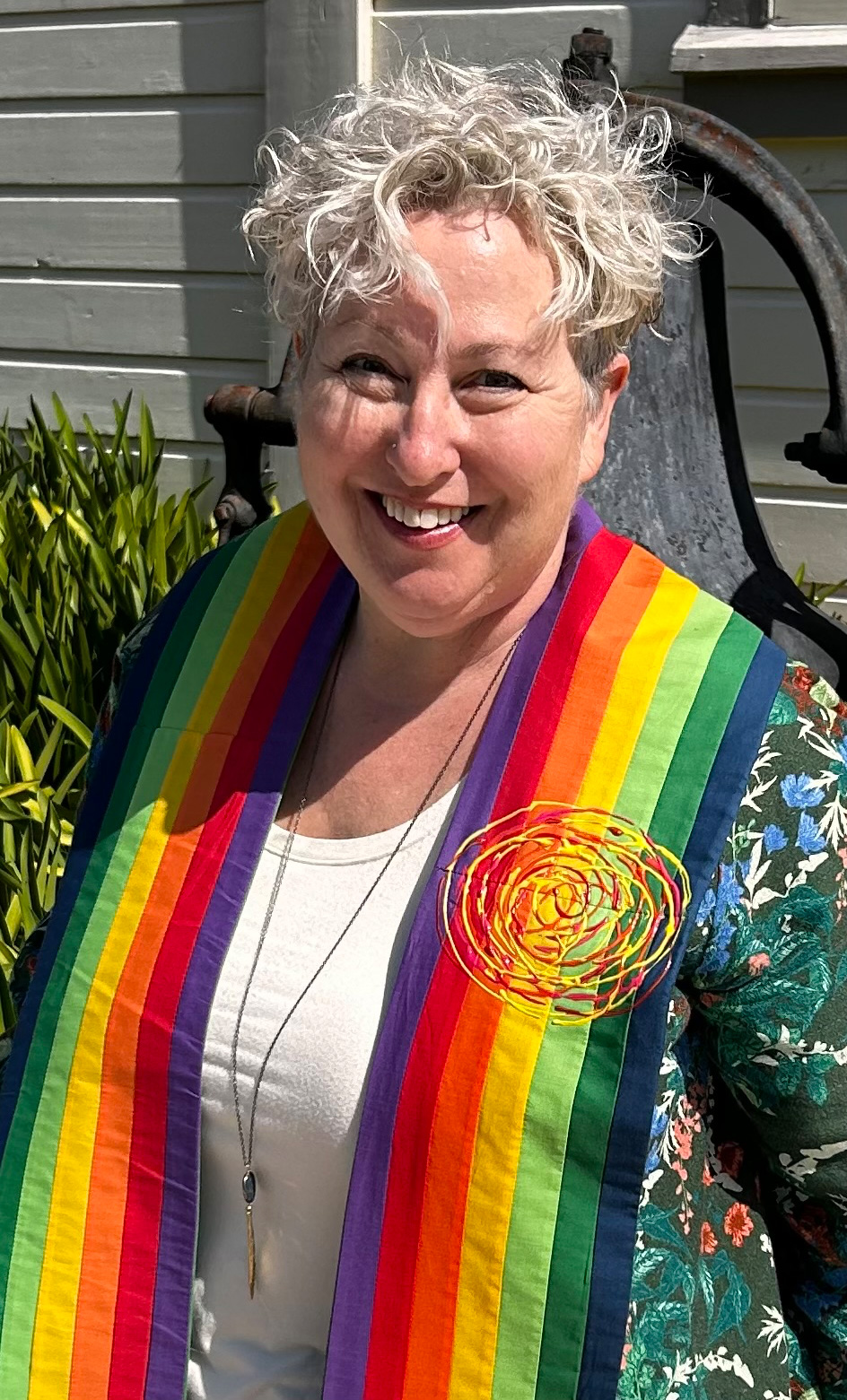
The slightly irreverent Reverend Dr. Curran Reichert has been stirring up “good trouble,” and serving up questions that challenge us to grow spiritually for the past ten years at FCC. She believes in the power of Spiritual community to be a force for good in the world. Curran is highly educated and dedicated to making Sonoma Valley a more just and equitable place.
Throughout the Valley, Rev. Reichert lends her perspective as a faith leader to addressing the need for fair housing and worker justice. She has been a leading voice concerning fair treatment of those without permanent shelter. She is committed to doing her part to end racial bias and deconstruct colonialism in the church and in our community.
Rev. Reichert understands that Christianity can be scary for people who have suffered abuse, or oppression due to bigotry and religious intolerance. She creates what she hopes will be a safe entry point for those seeking the support of a radically inclusive community of faith. Her motto is “Purpose, Presence, and Practice,” she embodies all three.
We love our pastor, and we think you will love her to. If you would like to make an appointment to meet with Rev. Reichert, receive prayers, or a visit from our support team, send her a message or call the church office at 707.996.1328.
Rev. Reichert often says, “FCC is the place you would want to go to church if you went to church.” We are a gathering of spirited people who care about earth justice, speaking out about injustice, tending to the vulnerable, and learning to find common ground, these are the relevant earmarks of our congregation. We invite you to join us on Sunday mornings either contemplative at 9:00am or regular in person at 10:30am. Here is the Zoom link for our 8:30 a.m. service.
1/19/2026
This week, Curran offers an article written by Rev. Cameron Trimble, UCC Clergy
The Cost of Courage
A Meditation by Rev. Cameron Trimble
January 14, 2026
Yesterday, six federal prosecutors in Minnesota resigned rather than participate in a Justice Department effort to investigate the widow of Renee Nicole Good, the woman killed by an ICE agent during a protest. Their departure names something many of us feel but struggle to articulate: there comes a point when staying means consenting to a lie.
What happened to Renee Good was not only an act of lethal force. What followed was just as devastating. Within hours, federal officials worked to recast her as a threat—a “terrorist”—despite video evidence that contradicted that claim. Her identity as a mother, a wife, a community member, a witness to state violence was erased and replaced with a category easier to govern, easier to dismiss, easier to justify killing.
Civil rights attorney, Sherrilyn Ifill, roots this in history:
Remember when the New York Times describing teenager Mike Brown who was killed in Ferguson, Missouri in 2014 as “no angel”? Or when then-NYC Mayor Rudy Giuliani in 2000 released the sealed juvenile records of Patrick Dorismond, a 26 year-old Black man killed by police, saying of the victim “he was no altar boy.” (For good measure Dorismond, it turned out, had attended the same Catholic high school as Giuliani had in fact, once been an altar boy).
So it was no surprise that within an hour of Ms. Good’s killing, DHS Secretary Kristi Noem described the victim as a “domestic terrorist.” The disgraceful FOX News host Jesse Waters, smugly described Good as “a self-described poet, with pronouns in her bio...[who]… leaves behind a lesbian partner.” In MAGA world that is how they signal to their base to turn off the empathy - that this white woman is not worthy of your sympathy – not worthy of protection.
Sometimes no adjustments are necessary. In all cases when there’s video, you are asked to disbelieve what you can see with your own eyes.
This is not an anomaly. It is a pattern.
When power feels threatened, it often responds by collapsing complexity into legibility. A grieving widow becomes an enemy. A witness becomes a danger. The violence of the state becomes “self-defense.” This is not harmless propaganda. It is a ritual of erasure, a way of stabilizing authority by rewriting reality itself. History has a name for this pattern. So does theology.
Across religious traditions, truth is not simply factual accuracy. Truth is relational. It is fidelity to what is real, especially when reality is inconvenient or destabilizing. In the Hebrew scriptures, truth—emet—is bound to faithfulness and justice. To distort the truth is not only to lie; it is to sever the moral fabric that makes communal life possible. The prophets understood this well. They warned that societies collapse not first through invasion, but through the normalization of falsehood.
James Baldwin named this danger: “Not everything that is faced can be changed, but nothing can be changed until it is faced.” What we are witnessing now is a refusal to face what has been done and an effort to punish those who insist on seeing clearly.
This is why the prosecutors’ resignations matter so deeply. Their courage was not performative. It was costly. They chose professional loss over moral complicity. They refused to participate in a system that demanded obedience at the expense of truth. In doing so, they reminded us that conscience is not an abstract ideal. It is a practice. It has consequences.
The spiritual crisis of this moment is not only the violence itself. It is the attempt to make that violence morally invisible. When the state trains us to distrust evidence, to doubt witnesses, to accept official narratives over lived reality, it asks us to surrender our moral imagination. When we do, the cost is not borne equally. It is borne by those whose lives are already treated as disposable.
This is why courage now looks different than it once did. It is not heroic posturing. It is staying aligned with reality when distortion becomes policy. It is telling the truth when silence and complicity is rewarded. It is refusing to let grief be rebranded as guilt or resistance as threat.
We are here because too many systems failed to hold power accountable. But we are also here because some people refused to go along. They remind us that repair remains possible because people continue to choose integrity over fear.
The cost of doing what is right is real. So is the cost of not doing it.
Today, we honor those who stood down rather than stand falsely. We grieve the life taken and the truth distorted. We recommit ourselves to the slow, necessary work of refusing erasure, of holding reality with tenderness and resolve, even when it breaks our hearts.
This is what moral courage looks like now. This is the work before us.
We are in this together,
Cameron